



Table of Contents
If you are a brand owner navigating the modern textile industry, the "alphabet soup" of certifications—GOTS, GRS, OCS, OEKO-TEX—can be overwhelming.
However, here is the hard truth: choosing the wrong certification strategy does not just waste your budget; it can lead to customs delays, "greenwashing" accusations, or even product recalls.

At Ljvogues, we don't just manufacture underwear; we provide compliance security. Let’s break down exactly which certificates matter for period underwear, why they are critical, and how to choose the right strategy for your market.
1. OEKO-TEX® Standard 100: The Non-Negotiable Baseline
If you only choose one standard, make it this one.
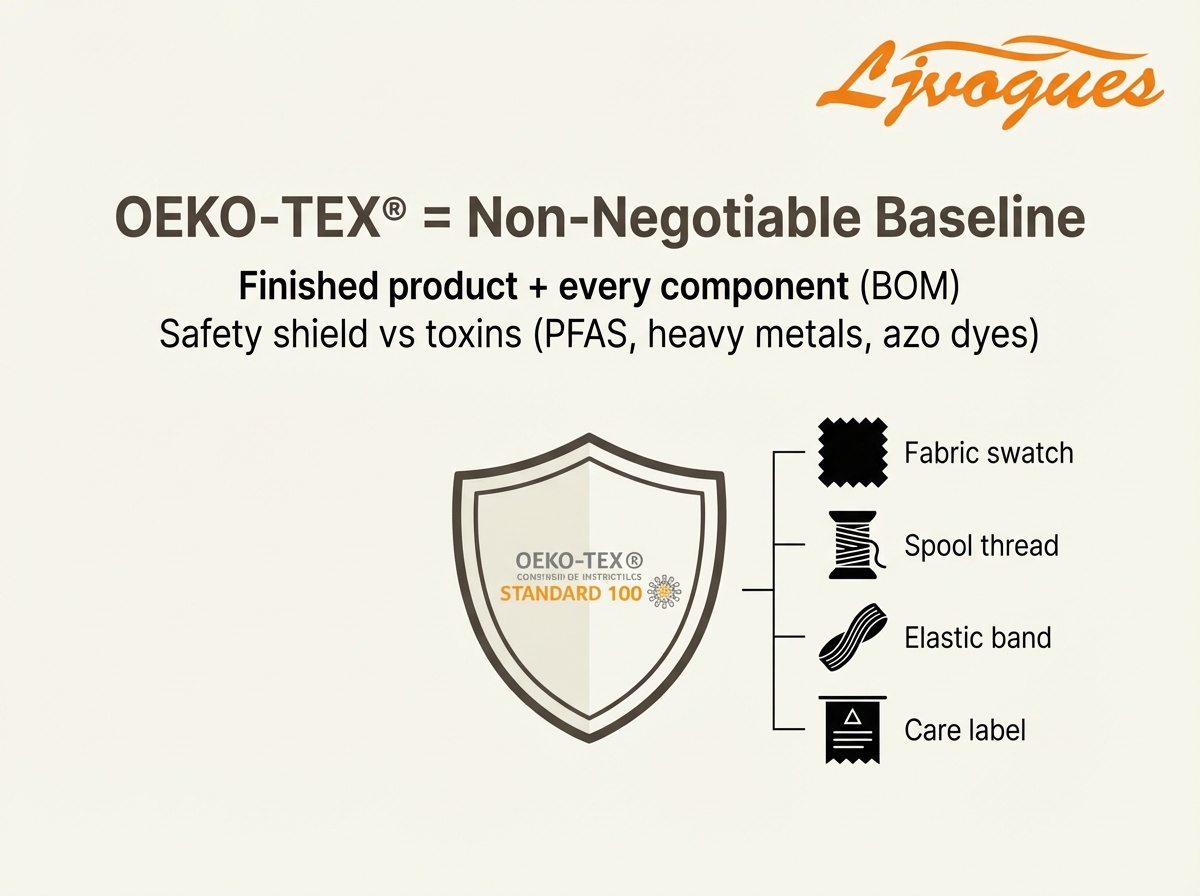
What it is: A globally standardized testing system that certifies the finished product (and every single component) is free from harmful substances like formaldehyde, heavy metals, azo dyes, and PFAS.
Why it is Critical for Period Panties: This product sits against the most sensitive, absorbent skin on the body (mucous membranes). In today's market, consumers are terrified of toxins. OEKO-TEX® is your "Safety Shield."
The Ljvogues Standard: We require OEKO-TEX® compliance not just for the main fabric, but for the entire BOM (Bill of Materials)—including the sewing thread, the elastic waistband, and the printed care label.
2. GOTS (Global Organic Textile Standard): The "Organic" Gold Standard
If your brand story is "100% Natural," "Earth-First," or targets the premium eco-market, you need GOTS.
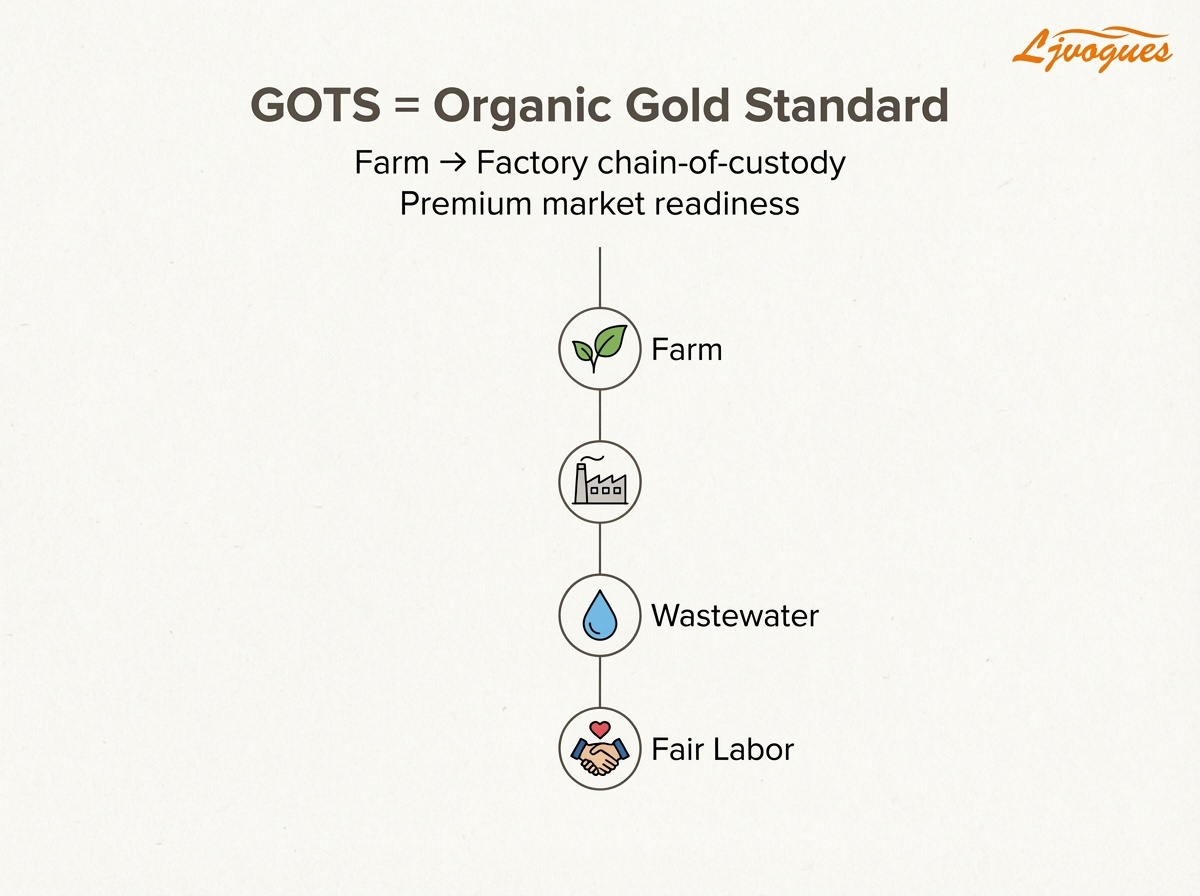
What it is: The world's leading standard for organic fibers. It covers the entire supply chain: from the farm (no pesticides) to the factory (fair wages, wastewater treatment, and chemical management).
The "Premium" Reality: GOTS-certified period underwear commands a higher price point. Why? Because the supply chain must be strictly segregated. We cannot mix organic cotton with conventional cotton on the cutting table or in storage.
When to use it: If you are targeting the high-end European or North American market and want to legally claim "Organic Cotton" on your main label without risk of litigation.
3. GRS (Global Recycled Standard): The Future of Synthetics
Period underwear usually requires some synthetic material for the waterproof barrier or the elastic waistband. GRS is how you validate the sustainability of those components.
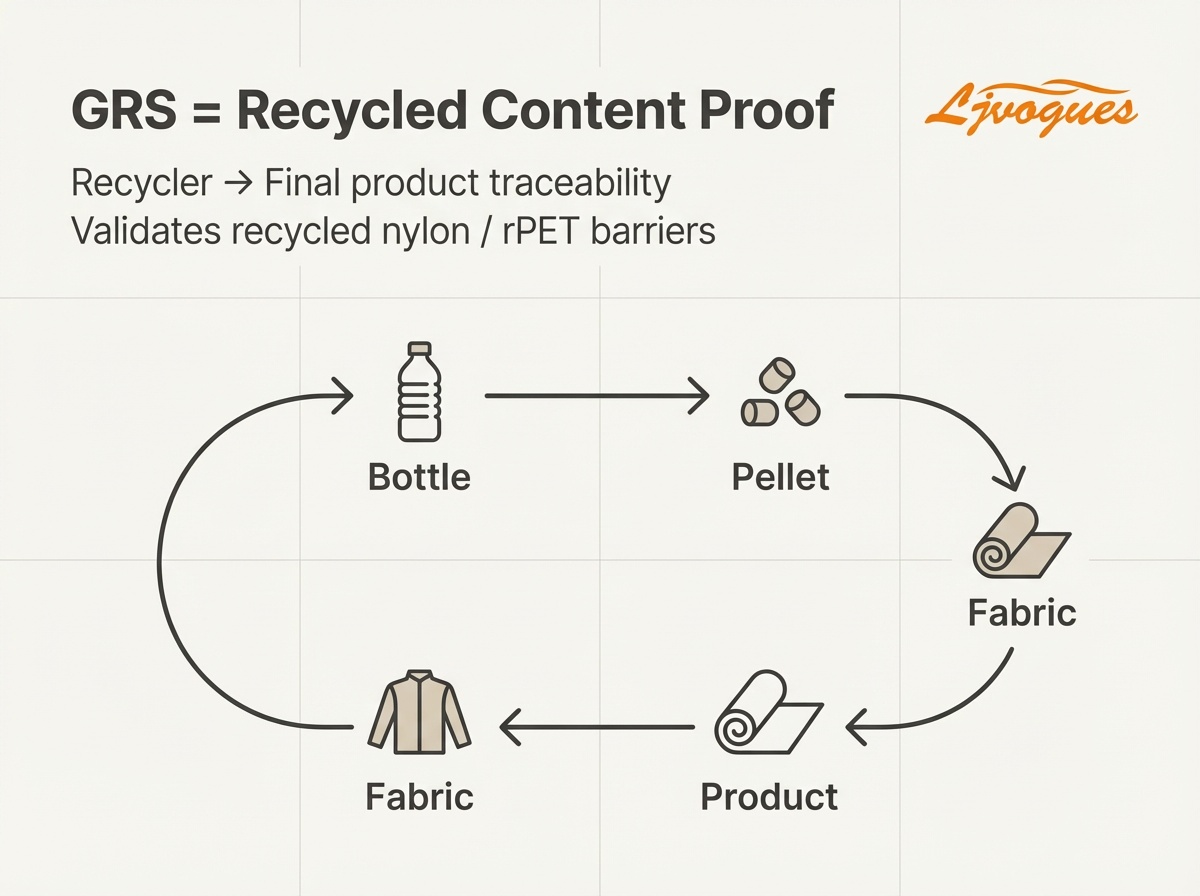
What it is: It verifies recycled content (like rPET from plastic bottles) and tracks it from the recycler to the final product. It also sets requirements for social and environmental practices in processing.
Why it matters: If you use a recycled nylon outer shell or a recycled polyester waterproof layer, GRS proves you aren't lying. It validates your "Plastic-Free Virgin Material" claims and appeals to the circular economy consumer.
Our Commitment: Transparency is Key
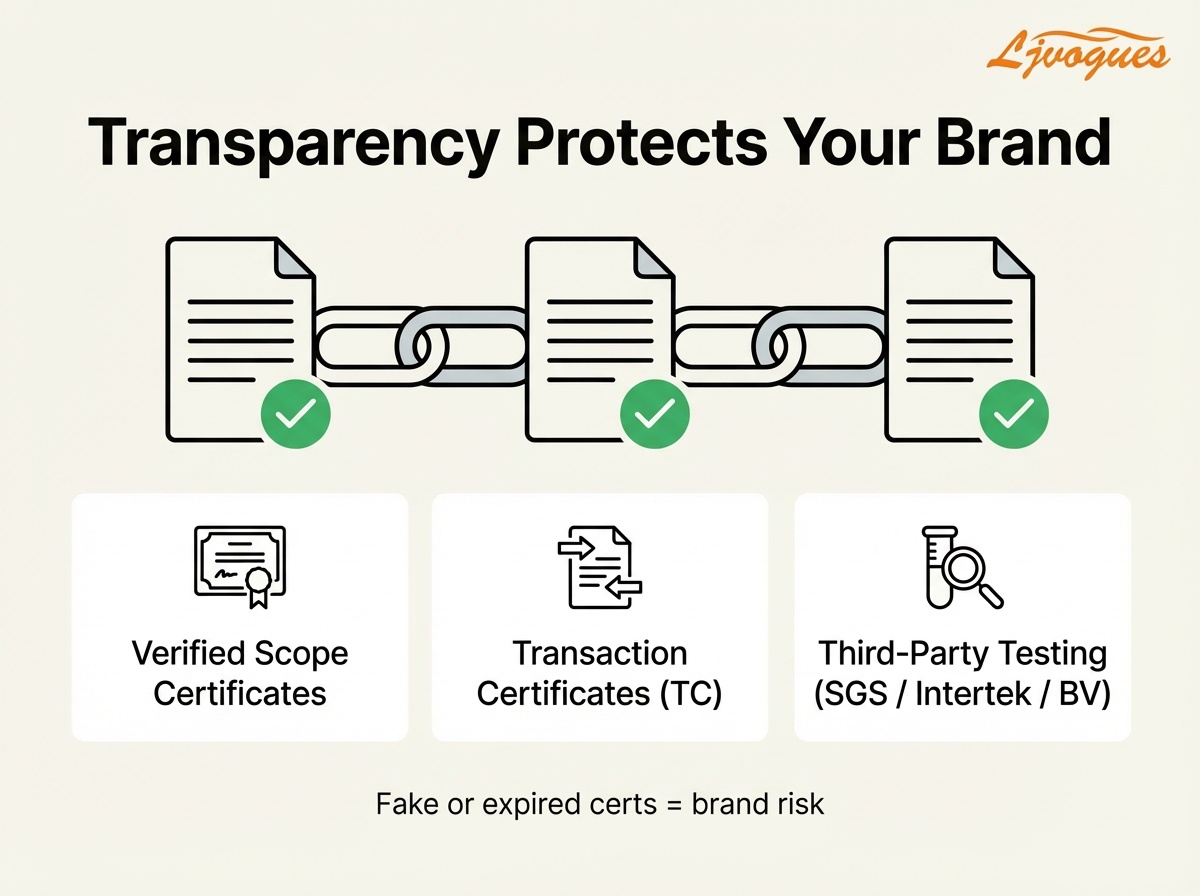
Certificates are useless if they are fake, expired, or misapplied—a common issue in the textile industry. At Ljvogues, we operate with full transparency to protect your brand reputation:
Verified Scope Certificates: Upon request, we provide valid scope certificates from our material suppliers for GOTS and GRS.
Transaction Certificates (TC): For bulk orders of organic or recycled products, we can apply for TCs. This is the only way to prove that your specific batch of fabric is certified (essential for auditing).
Third-Party Testing: We actively support and coordinate testing with major labs like SGS, Intertek, or BV to verify that our products meet regional regulations, such as REACH (EU) or Prop 65 (US).
Don't guess on compliance. Tell us your target market, and we will tell you exactly which certifications you need to launch safely and successfully.