



Table of Contents
A Sourcing Guide for the Green Revolution: How GRS Nylon, Tencel™, and PFAS-Free Chemistry are redefining sustainable menstruation.
Introduction: The Ultimate Sustainable Swap
When asking, "Are there period underwear products that are eco-friendly and sustainable?", the answer is a resounding yes. In fact, switching to period underwear is arguably the single most impactful eco-swap a person can make in their lifetime.
However, sustainability goes beyond just being "reusable." True eco-friendly period underwear is defined by what it is made of (Recycled/Organic), how it is made (Ethical Manufacturing), and what it replaces (Thousands of plastic pads).
Leading brands like Modibodi (Biodegradable), Aisle, and Thinx are pioneering this shift. But as a manufacturer, I know that "green" labels can be misleading. This guide breaks down exactly what makes a period panty truly sustainable.
1. The Data: Period Underwear vs. Disposables
To understand the magnitude of the impact, let's look at the data comparing a 5-year cycle of using period underwear versus traditional disposables.
Feature | Disposable Pads/Tampons | Eco-Friendly Period Underwear |
Waste Generated (5 Years) | 1,200 - 1,500 items (Landfill) | 0 items (Just 10-15 pairs washed) |
Decomposition Time | 500+ years (Plastic liners) | Decades (or years if biodegradable) |
Carbon Footprint | High (Oil extraction for plastics) | Low (Replaces manufacturing cycles) |
Cost to Consumer | ~$600 - $1,000 USD | ~$150 - $250 USD |
Chemical Exposure | Bleach, Dioxins, Fragrances | None (If Oeko-Tex/PFAS-Free) |
Manufacturer's Insight: The biggest environmental win isn't just the landfill reduction; it's the Carbon Footprint. Manufacturing 1,000 plastic pads requires significantly more crude oil and energy than producing 5 pairs of durable, washable underwear.

2. The Material Triad: What Makes It "Eco"?
Not all reusable underwear is sustainable. If it's made from virgin polyester (new plastic), it still has a carbon cost. At Ljvogues, we focus on three tiers of sustainable materials:
Tier 1: Recycled Synthetics (The "Zero Waste" Choice)
What it is: Recycled Nylon or rPET (made from post-consumer plastic bottles or fishing nets).
Why it helps: It removes waste from the planet and uses 50% less energy to produce than virgin nylon.
Certification: Look for the GRS (Global Recycled Standard) label.
Tier 2: Regenerative Fibers (The "Natural" Choice)
What it is: Tencel™ Modal or Lyocell.
Why it helps: Fibers made from sustainably harvested beech wood pulp in a "closed-loop" system where 99% of the water/solvents are recycled. It is biodegradable and softer than cotton.
Tier 3: The "PFAS-Free" Standard (The "Safe" Choice)
The Issue: Many water-resistant fabrics use PFAS (Forever Chemicals) to repel liquid. These are toxic and don't break down.
The Solution: We use eco-friendly, Fluorine-Free DWR coatings. Always check that a brand explicitly states "PFAS-Free."
3. How to Spot "Greenwashing" (A Buyer's Checklist)
As the demand for eco-products grows, so does false advertising. Here is how to audit a brand (or supplier):
Vague Terms: Avoid brands that say "Natural Bamboo." Bamboo is chemically intensive unless processed via the Lyocell method. Look for specific fiber names.
No Certifications: If they claim "Organic" but don't have a GOTS or Oeko-Tex certificate number, be skeptical.
Plastic Packaging: A truly sustainable brand will ship in Compostable Mailers or recycled cardboard, not single-use poly bags.
Conclusion: Sustainability is the New Standard
Are there eco-friendly period underwear products? Absolutely. They are the future of menstrual health.
For Consumers: By choosing brands that use Recycled Nylon or Organic Cotton, you are voting for a cleaner planet with your wallet.
For Businesses: Sustainability is no longer a "niche"—it is a Retail Requirement. If you want to build a brand that lasts, you must start with a sustainable supply chain.
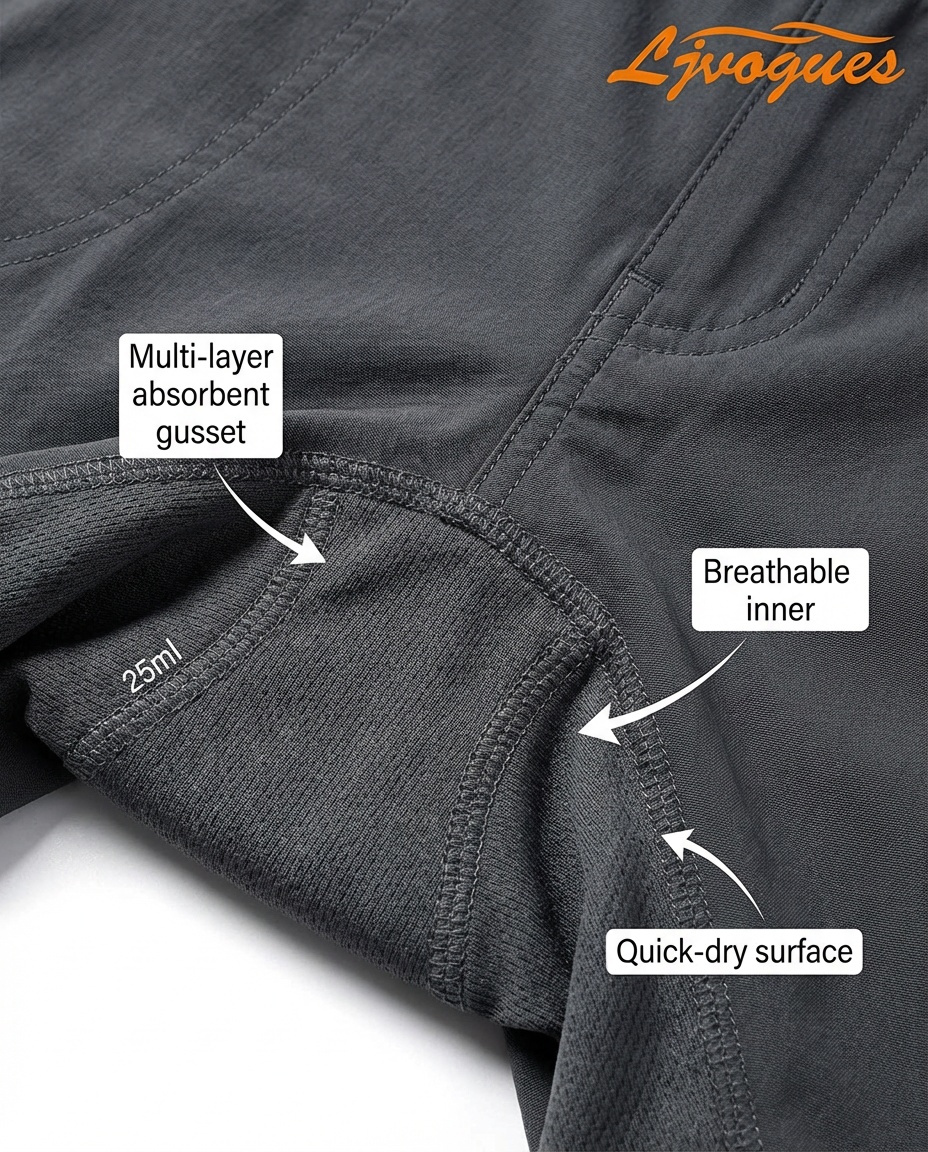
Ljvogues offers GRS-certified manufacturing, PFAS-free testing, and Biodegradable Packaging options, helping you create products that are as good for the earth as they are for your customers.
Ready to manufacture a Green Collection?
Explore Ljvogues Sustainable Materials
About the Author
Ocean Yang
CEO & Founder, Ljvogues
Ocean Yang is the CEO of Ljvogues, a manufacturing leader committed to the "Green Textile" revolution. He champions the use of recycled fibers (GRS), closed-loop Tencel™, and eco-friendly dyeing processes in the production of period underwear. Ocean works tirelessly to reduce the industry's carbon footprint while delivering high-performance, sustainable solutions to global brands.