



Table of Contents
In B2B manufacturing, silence breeds suspicion, but transparency builds partnerships.
Many brand owners ask me: "Ocean, why is the quote for the side-opening detachable style 35% higher than the standard one?"
It is a fair question. Today, I am opening our factory cost sheets to explain exactly where that money goes—and why the Return on Investment (ROI) for detachable styles is often significantly higher, despite the upfront manufacturing cost.
The Cost Difference: A Transparency Report
Let’s compare the production reality of a Standard 4-Layer Period Panty versus a Detachable Side-Opening Panty (assuming the same fabric and absorbency levels).
1. Sewing Complexity (Labor Cost)
This is the single biggest driver of the price difference.

Standard Panty: Structurally, it is a tube. The process involves sewing side seams, attaching the waistband, and finishing the leg elastic. A skilled worker can finish one unit in 6–8 minutes.
Detachable Panty: This is a mechanical system, not just a garment.
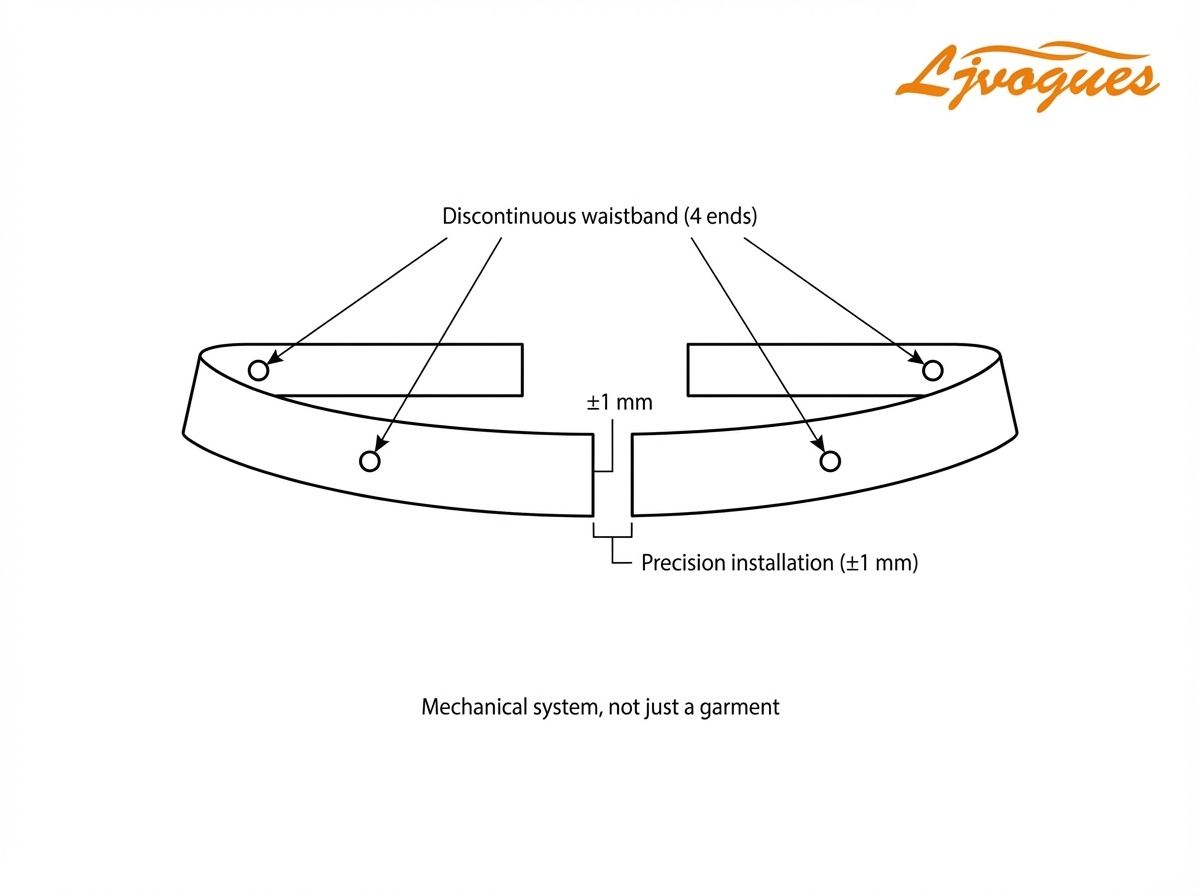
Discontinuous Waistband: The waistband has 4 distinct "ends" that must be finished cleanly and reinforced.
Precision Installation: Installing hook-and-eye tape or snaps requires specialized machinery and a slower sewing speed. If the alignment is off by even one millimeter, the panty twists on the body.
The Result: Production time jumps to 10–12 minutes per piece. This represents a 30-40% increase in direct labor cost.
2. Additional Materials (Hardware Cost)
Standard: Requires only a standard elastic band (~$0.15).
Detachable: Requires high-quality resin snaps or ultra-flat hook-and-eye tape ($0.40 - $0.80 per set).
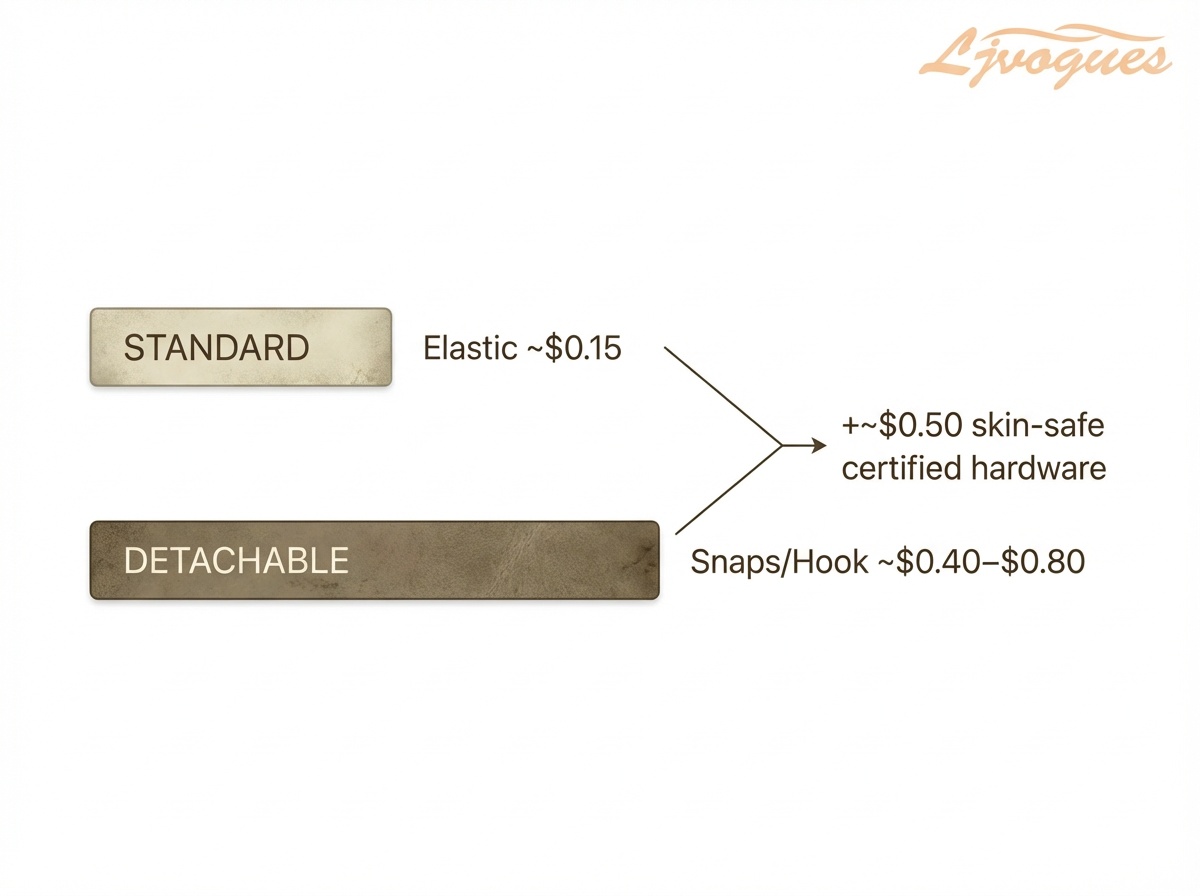
Ocean's Note: We do not use cheap generic snaps. We use OEKO-TEX® certified, skin-safe hardware that is guaranteed not to rust, scratch, or trigger metal allergies. This adds roughly $0.50 per unit to the Bill of Materials (BOM).
3. Yield Loss (The Hidden Cost)
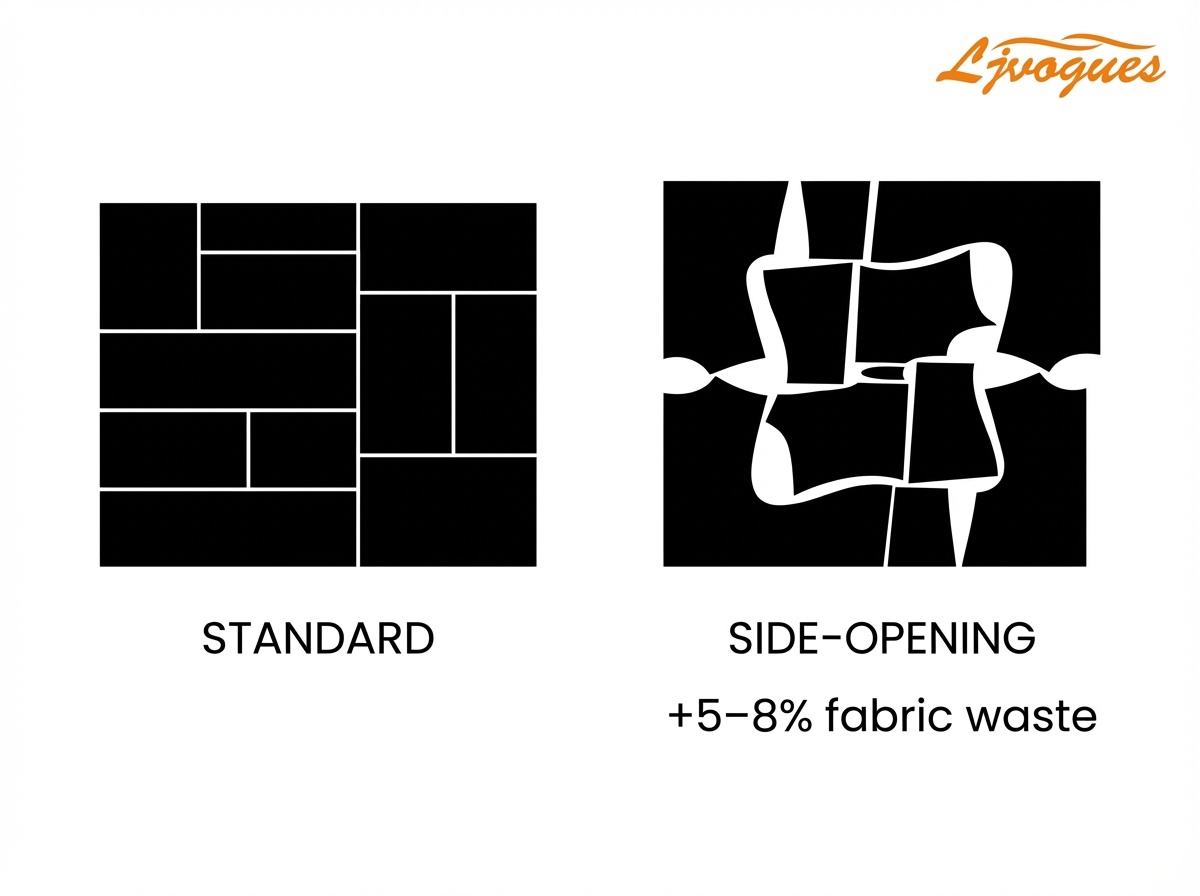
Fabric Utilization: Side-opening patterns are less efficient to cut from a fabric roll than standard briefs due to their irregular shapes.
The Result: Fabric wastage is typically 5–8% higher, which incrementally increases the raw material cost per unit.
Total Impact: The factory transfer price (EXW) for a detachable style is typically $1.50 – $2.50 higher than its standard equivalent.

The ROI Case: Why Smart Brands Pay More
If it costs more to make, why are top brands rushing to launch detachable styles? Because the Retail Math works in their favor.

Metric | Standard Period Panty | Detachable Period Panty |
Typical Retail Price | $20 – $28 | $35 – $45 |
Gross Margin | ~65% | ~70% (Premium Positioning) |
Customer LTV | Moderate | High (Solves a specific pain point) |
Competition | High (Red Ocean) | Low (Blue Ocean) |
The Value Proposition
Higher Perceived Value: Customers intuitively understand that "hardware + functionality" equals "expensive." They are willing to pay a premium for the convenience of changing in an office stall or airplane bathroom without removing their trousers.
The Bundle Strategy: Detachable styles are rarely bought alone. Smart brands sell a "Travel Kit" (1 Detachable Frame + 2 Inserts). This significantly drives up your Average Order Value (AOV) while lowering your effective cost of goods, as inserts are cheaper to produce.
Lowering the Barrier: The Ljvogues Solution
We know that launching a complex, higher-cost product feels risky. We are here to mitigate that risk.
Our Flexible Approach:
Mixed Orders: You don't need to order 3,000 detachable panties to start.
The Split: You can order 500 Detachable + 1,500 Standard units.
Efficiency: We run them on the same fabric line to save material costs, allowing you to test the high-end market without going "all in."
Conclusion
A detachable panty costs more to make because it is a more advanced, technical product. But for your brand, it is a ticket to a higher price point, a unique market position, and a more loyal customer base.
Want a detailed cost breakdown for your specifi
c design? Send me your tech pack today, and I’ll provide a transparent, line-item quote.